What’s In (and Out) for Facial Cosmetic Surgery in 2026


New year, new predictions! Kirstin revisits Dr. James Koehler’s takes from last year to see which ones held up, then he and Dr. Vincent Gardner look ahead to 2026 and where facial cosmetic trends may be headed.
Get their takes on the growing shift toward more natural results, filler fatigue, whether younger people should really be choosing surgery earlier, and why deep plane face lifts continue to be the gold standard for facial rejuvenation.
They also talk about how AI is starting to show up in patient education and virtual care and why nothing can replace a surgeon’s trained eye, experience, and human judgment when it comes to great results.
Learn more about face lift and other facial cosmetic procedures
Alabama the Beautiful is the cosmetic surgery podcast co-hosted by Dr. James Koehler, a surgeon with over 2 decades of expertise in cosmetic surgery and his trusty co-host Kirstin, your best friend, confidante, and the snarky yet loveable “swiss army knife” of Eastern Shore Cosmetic Surgery.
Have a question for Dr. Koehler or Kirstin? Record your voicemail at alabamathebeautifulpodcast.com and we’ll answer it on the podcast.
Eastern Shore Cosmetic Surgery is located off Highway 98 at 7541 Cipriano Ct in Fairhope, Alabama.
To learn more about the practice or ask a question, go to easternshoreplasticsurgery.com
Follow Dr. Koehler and the team on Instagram @easternshorecosmeticsurgery
And on TikTok @jameskoehlermd
Watch Dr. Koehler & Kirstin on YouTube @JamesKoehlerMD
Alabama The Beautiful is a production of The Axis: theaxis.io
Theme music: Never Need a Reason, Guy Trevino and Friends
Announcer (00:02):
You're listening to Alabama the Beautiful with cosmetic surgeon, Dr. James Koehler and Kirstin Jarvis.
Kirstin (00:10):
Hey, Dr. Koehler and Dr. Gardner.
Dr. Koehler (00:13):
Hello, Kirstin.
Kirstin (00:14):
Hey, Kirstin.
(00:16):
How are y'all today?
Dr. Koehler (00:18):
Oh, great. It's a great day.
Kirstin (00:22):
Well, today we're going to be talking about 2026 predictions, and we're going to interview Dr. Koehler and see what he thinks about facial cosmetic surgery for 2026.
Dr. Koehler (00:35):
Predictions for this year.
Kirstin (00:36):
For this year, which we did an episode like this last year. So let's see if your predictions from last year were right or wrong.
Dr. Koehler (00:45):
Okay.
Kirstin (00:46):
Okay. In 2025, you said that GLP-1 weight loss drugs will keep growing, but with emerging blowback from side effects like muscle loss, gastroparesis lawsuits, and TV ads. Did that happen or did you see any of those effects yourself?
Dr. Koehler (01:03):
Yeah, no, I mean, I feel ... I don't know. I don't know about the lawsuit thing. I didn't follow up on that, but I do think that there's been a lot more discussion about muscle loss. That's been a big thing. But it was kind of already known, but I think it's because of the prevalence of these GLP-1s that people are talking about it now a little bit more. And I think there's been some other medications that are trying to compete with these drugs to claim that they are better at preserving muscle mass. So yeah, I mean, I think that all pretty much came true.
Kirstin (01:35):
Yeah. Okay. Well, number two was that wellness or medical weight loss and hormone therapy was also going to grow and that people were going to emphasize the holistic lifestyle over surgeries.
Dr. Koehler (01:52):
Well, I don't know if I could tell you if that all came true.
Kirstin (01:55):
That does not correlate for us.
Dr. Koehler (01:57):
Yeah. I mean, we're still doing a lot of surgery, but there's certain things that you just can't change. It doesn't matter how holistic you get, you can't change those things. But I think hormone replacement has taken ... If you look on social media, I mean, there's been a lot of discussion about what a crime it's been for women with this whole only replace for the shortest period of time and get people off of it as quickly as possible and all of that kind of stuff. Yeah. Now bioidenticals is definitely a front and center discussion for hormone replacement, particularly for women.
Dr. Gardner (02:37):
Thank you, RFK Jr.
Kirstin (02:40):
Yes. I just recently came across a podcast clip on TikTok. There was a physician on there talking about how women have been robbed for decades and now the FDA is finally looking at hormone replacement therapy for women and it's shaping up to be a good thing.
Dr. Gardner (02:57):
Yeah. I mean, they've removed the black box warnings, so what does that tell you?
Kirstin (03:02):
Number three was that liposuction and breast augmentation were going to stay top procedures, but then trends were going to shift to smaller implants, smaller booties, that kind of thing.
Dr. Koehler (03:16):
I think that all came true. I had dinner with my implant rep and his regional manager, and that was actually a little one of the things that we were discussing is that there's still bigger implants being put in, but there's definitely been a trend towards slightly smaller implant sizes, maybe not dramatic, but somewhat smaller. And I still think that breast surgery and liposuction still remains one of the top procedures that people get done.
Kirstin (03:46):
The next one was that breast implant removals were going to remain steady or plateau after a social media-driven spike by BII fears.
Dr. Koehler (03:57):
Well, we've been seeing fewer patients for that. There's still that camp of people that are concerned that their implants can impact their health. I think that will continue and it will not change, but I don't think there's this push. And a few years ago, there was a really ... I noticed a very steep ramp up of people with concerns. And now I kind of feel like that's definitely leveled off and if anything, it's actually kind of come down a little bit.
Dr. Gardner (04:26):
Interestingly, autoimmune disease has been linked to obviously our diet. And I think the processed foods and the sugar and everything else we're doing, there's been an explosion of autoimmune disease. So I think there's obviously other explanations for why people could be having issues, but it gets focused on breast implants.
Dr. Koehler (04:47):
Yeah. Well, I mean, I think we've had these discussions before, but people want to look for a cause and effect. They were healthy and then they go, "Well, what's the only thing that's changed?" "Well, I got breast implants a few years ago. It must be my breast implants. "I've told the story many, many times to patients, but I had a patient with lupus that got implants and her lupus didn't change and we had a long discussion beforehand, but she had a friend getting her implants out. And at the end of it, the girl with lupus said," I would've totally blamed my lupus on my implants if I had got the implants before I was diagnosed with lupus. "So that's one of those things, right? There's a patient who had autoimmune disease beforehand. It didn't change, but that's our gut reaction, right? We want to have something to blame it on.
(05:35):
And you're right. Unfortunately, there's other things in ... There's environmental things, diet, all sorts of other issues that could be contributing to it. And that's the hard part with this whole concept of are my implants impacting my health is there's not a blood test, a skin test, any kind of test at this point to really say that, oh, it is impacting your health.
Kirstin (06:02):
Okay. Number five was that there were going to be no new major tech breakthroughs.
Dr. Koehler (06:10):
Yeah. I don't think there was any major ... Do you think there was any major tech breakthroughs for surgery? I can't ...
Dr. Gardner (06:18):
No, not really. I mean, in the non-surgical, there really hasn't been anything.
Kirstin (06:25):
So they said that AI skin analysis has evolved, but at risk unrealistic expectations.
Dr. Koehler (06:34):
Well, any of these predicting devices or simulations and stuff like that are always ... We had 3D imaging that we've gone through actually many different versions of it to try to help people get a better understanding of, well, what would my body look like if I had a rhinoplasty or what would my body look like if I had breast implants? And these things are simulators to kind of help you maybe make a better decision, but the reality of it is they're not predictive. And it's the same, even though AI has gotten a lot better maybe at simulating some of those things, it's still not perfect.
Kirstin (07:11):
I was just reading the questions here from our producers, and I thought they were just joshing with me, but I think you actually said this last year, that AI advances in research and lectures would replace office managers by 25 and 26.
Dr. Koehler (07:29):
I never said that, but I'm looking to replace one. So if AI can do it, yeah, sure. No, I never said that.
Dr. Gardner (07:39):
If it's on the teleprompter, it must be true.
Kirstin (07:41):
Exactly, Dr. Gardner.
Dr. Gardner (07:42):
Just ask Ron Burgundy.
Kirstin (07:45):
Okay. How about we said non-US beauty tourism was risky due to follow-up and travel complications despite global talent.
Dr. Koehler (07:56):
Yeah. I mean, I think that's going to be a true statement no matter what, because unfortunately, and any surgeon that does surgery knows there's complications. And when you travel long distances, unless you're prepared to travel back or ... I mean, there can be problems and we certainly ... And the bigger the surgery, the higher the chance of a problem. Sometimes if it's a smaller procedure, maybe not such a big deal. But there's certainly been plenty of examples of issues with patients having problems and traveling to other countries to have surgery.
Kirstin (08:32):
Yes. We're talking other countries. We want people to travel to Fairhope for surgery.
Dr. Koehler (08:37):
Yeah. And obviously, but even traveling in general, it doesn't matter if it's out of the country, there's still potential issues. But when we have patients from out of town, we have those discussions like, how long are you going to be ... We need you to stay this long and you're going to have to come back for follow-ups. And if there are other things, you may need to come back. So I mean, that's going to be true for anybody having any travel surgery.
Kirstin (08:59):
Okay. Well, now we're going to talk about 2026 predictions and whether y'all agree or disagree. Dr. Koehler, you've kind of shifted your focus a little bit more to faces in 2025, still doing lots of body, but doing a few more facial surgeries. And then Dr. G joined the team this past fall. Last year at this time, could you have predicted that we were going to have another surgeon?
Dr. Koehler (09:26):
Yeah, I was looking. I mean, I've been wanting to add someone to the practice and didn't know when the time was going to exactly happen, but I wanted it to be the right person. And I'm glad that we got Dr. Gardner because he's a perfect fit and all that. So I couldn't have told you I didn't have my crystal ball that it was going to be 2026. It could have been summer of 26. I don't know. But yeah, I know it's all happened and I'm glad that it did. And yeah, glad to expand and have Dr. Gardner's experience, got extensive experience with body contouring surgery, so that's great. I'm going to focus a little bit more on some facial things, and he's, again, got all these massive weight loss, body conquering procedures under his belt. So that's awesome.
Kirstin (10:19):
Which by the way, we have, just kind of going back to the last subject, we have seen kind of an uptick of patients traveling to see us because of Dr. Gardner. He's got lots of out of town patients.
Dr. Koehler (10:30):
Worldwide.
Kirstin (10:30):
Oh, he might be stealing the title.
Dr. Koehler (10:33):
Dr. Worldwide. Yeah.
Kirstin (10:35):
So for facial predictions, 2026, they are saying maybe we're going to see a more widespread use of fat instead of filler. What do y'all think about that?
Dr. Koehler (10:47):
There may be more of a trend towards people wanting to do fat grafting. Of course, it's your own body and all of that. There's all those attractive features, but I think there's filler burnout. I think that we're seeing less filler patients in general. I feel like the neurotoxins, the Botox, and the Dysport, that hasn't really changed, but I do feel like maybe a little less in terms of filler, but I don't really feel like the fat grafting is going to be like ... If it's up, it's going to be up a little bit. I don't see it skyrocketing.
Dr. Gardner (11:19):
I agree. I mean, fillers are, especially lips and cheeks are kind of my favorite and it's easy. It doesn't take long. It's reproducible and fat obviously is more expensive because of the liposuction and the additional stuff. So I agree. I don't think fillers are necessarily going anyway, but I do agree we have seen less.
Kirstin (11:43):
Okay. Do you think younger patients are going to start skipping injectables and we'll see them going more towards procedures like eyelid surgery and lip lifts?
Dr. Gardner (11:53):
I mean, I think it depends on where you go because you're going to find people that are going to do a lip lift on a 25-year-old. People are going to find what they want. If they want to get something done, they're going to find somebody that will do it. What I think you really want is somebody that's going to tell you the truth and be honest with you about your options. And I feel like we do that and I would much rather go to a place that's going to give you honest answers and not just try to, "Hey, I can do this for you. This is what it costs and let's sign you up." So I like the way we do it and I think that's the right way to do it.
Kirstin (12:31):
I agree. All right. For the deep plane facelift, is it going to continue to rise and become more targeted with some mid-face focus or more use of lymphatic techniques for less swelling during surgery?
Dr. Koehler (12:48):
The deep plane facelift is definitely here to stay for the time being. I mean, I think it's kind of for people wanting to get a natural result, my opinion, it's the best facelift. I don't see it really going anywhere. The popularity of it is certainly ... I mean, even we've talked about this before, I think unfortunately there's probably surgeons saying they're doing deep plane facelifts when they probably maybe are not doing a true deep plane facelift, and it's just because it is such a, from a marketing standpoint, that's what people are looking for because they've heard that's the best way to get a facelift so that they should get a deep plane. And so I think for fear of missing out, people may be saying that when they're maybe not exactly doing a deep plane. But again, I don't know that for certain, but definitely the deep plane facelift is not going anywhere.
Kirstin (13:43):
What about AI? Do you think we're going to see AI show up in cosmetic practice?
Dr. Koehler (13:48):
Oh yeah. I mean, I think it's going to be more involved for a lot of different things like maybe just helping patients in the journey in terms of aftercare and stuff like that. And it's already being used on a lot of people's websites for consultations. So they do virtual consultations and these bots that are on there answering questions about procedures. It is a little bit more generic and it's not highly fine tuned, but it's a way for patients to get more education and information, but AI is not going to be replacing the surgery that we do at this point in time.
Kirstin (14:27):
Yeah, only the office managers.
Dr. Koehler (14:30):
Yes. Yes. Yeah. That's probably like, it could be by summer, it's hard to say, but ...
Kirstin (14:39):
Okay. Moving on from that, where do you think AI does not belong as far as in our practice?
Dr. Koehler (14:47):
I view AI is one of those things like you got to get on board because it's not going away. It's here to stay. So we want to use it to augment what we're doing, but it's not a replacement. You might be able to take a picture of yourself at some point and upload it to the AI and it could analyze you and say, "Oh, you'd benefit from this, this and this. " But still, and Dr. Gardner knows this. I mean, if a patient goes to two or three different doctors, they may get some similar opinions, but they may have some differences. And some of that may be because a surgeon maybe does a specific technique that they're particularly good at and maybe another doctor doesn't do it because maybe that's not in their wheelhouse. So just because a computer can say something or AI might say something, you may get different opinions.
(15:38):
It doesn't replace the experience of the surgeon. It doesn't replace just that judgment that comes with years of practicing.
Dr. Gardner (15:47):
And our patients all use AI every day because if you Google something, you're going to get the AI answer. And I agree with Dr. Kohler, say they had a program where AI, you took a picture of your problem or your problem area and you uploaded it and then AI examined it and gave you an answer. The problem with that is photography is very difficult, especially when you talk about tones and the lighting. I mean, skin is very difficult to see. And we have people all the time that say, they'll send a picture and say, "Hey, I think I got some redness here." And the picture, there's no redness. And then they come into the office and it's red or the opposite. They say, "Gosh, this looks really red. I'm really concerned about it. " And then when they get to the office and we look at it and say, "I don't really see much." So pictures are so deceptive.
(16:41):
And if you're going to rely on an AI model that's based on a picture that you sent in, same thing for breast. If somebody sends in a breast picture and they're turned slightly, one breast is going to look bigger than the other, and they're going to say, "Oh my gosh, I've got a hematoma." And they come into the office and when you look at them perfectly symmetric, they don't have a hematoma. So I think yes, their AI is unavoidable, but I do think we need to be careful because if you're relying on AI, especially for post-op management, you're probably going to be in trouble.
Kirstin (17:16):
What do you think will be the biggest shift in facial aesthetics overall in 2026? If you each had to pick one thing that you think is going to change the most?
Dr. Koehler (17:27):
The only thing I will say is I feel like all the discussion with Kris Jenner, when she had her procedure done and everybody's like, "Oh my God, she looks so good." I do feel like there's definitely a shift towards people's desire for natural results, not overdone results. And we've seen plenty of examples and people in Hollywood and people, they have the money to afford whatever it is that they want to get done and yet somehow have managed to get a lot of unnatural results. So I think there's just maybe a desire for looking better, but still not overdone. And I can tell you, I've heard in the past patients would come in and they'd be like, "Well, if you're doing my face, pull it as tight as you can. " And I have to stop and go, "Okay, look, look, you don't want me to really do that because that's not going to look good." You want it to look normal.
(18:25):
So anyhow, maybe that's the only thing I would say that might be a push. People are in general, we talked about smaller implant sizes, BBLs being smaller volume. I think people are maybe choosing something in the more ... It's just more moderation maybe overall.
Kirstin (18:43):
All right. Do you have a burning question for Dr. Koehler or Dr. Gardner or me? You can leave us a voicemail on our podcast website at alabamathebeautifulpodcast.com. We'd love to hear from you. Thanks, Dr. Koehler and Dr. Gardner.
Dr. Koehler (18:58):
Thanks, Kirstin.
Dr. Gardner (18:58):
Thank you.
Kirstin (18:58):
Go back to making Alabama beautiful.
Announcer (19:02):
Got a question for Dr. Koehler? Leave us a voicemail at alabamathebeautifulpodcast.com. Dr. James Koehler is a cosmetic surgeon practicing in Fairhope, Alabama. To learn more about Dr. Koehler and Eastern Shore Cosmetic Surgery, go to easternshorecosmeticsurgery.com. The commentary in this podcast represents opinion and does not present medical advice, but general information that does not necessarily relate to the specific conditions of any individual patient. If you enjoyed this episode, please share it and subscribe to Alabama the Beautiful on YouTube, Apple Podcasts, Spotify, or whererever you like to listen to podcasts. Follow us on Instagram at EasternShoreCosmeticSurgery. Alabama the Beautiful is a production of The Axis, T-H-E-A-X-I-S.io.
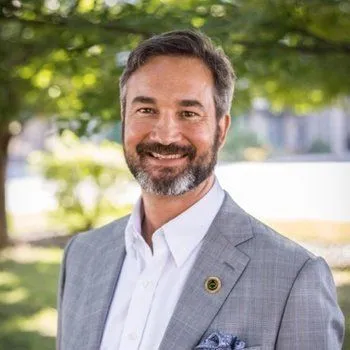
Cosmetic Surgeon
Early in his career, Dr. Vincent Gardner worked extensively in bariatric surgery. Seeing patients struggle with excess skin after major weight loss inspired his passion for cosmetic surgery. He loves giving people that “reveal moment” where they can finally see and feel the results of their hard work.
Alongside cosmetic surgery, Dr. Gardner has spent over two decades treating venous disorders. His minimally invasive vein procedures restore comfort, energy, and confidence, helping people feel like themselves again.