Why Today’s Hair Transplants Don’t Look Fake







Hair restoration surgery has come a long way, and today’s results can look incredibly natural when the right technique and patient come together.
Dr. Koehler, Dr. Gardner, and Kirstin explain how NeoGraft and follicular unit extraction (FUE) have changed the game, and why most people choose these methods over older strip techniques.
Find out who’s a good fit for hair restoration surgery, what the procedure and recovery are like, and why managing expectations matters just as much as the surgery itself.
Plus, get the truth on common myths about hair transplants, the importance of post-op care, and how you can camouflage your recovery if you don’t want anyone to know about it.
Learn more about NeoGraft Hair Restoration
Follow Dr. Gardner on Instagram @drvincentgardner and TikTok @drgardner
Alabama the Beautiful is the cosmetic surgery podcast co-hosted by Dr. James Koehler, a surgeon with over 2 decades of expertise in cosmetic surgery and his trusty co-host Kirstin, your best friend, confidante, and the snarky yet loveable “swiss army knife” of Eastern Shore Cosmetic Surgery.
Have a question for Dr. Koehler or Kirstin? Record your voicemail at alabamathebeautifulpodcast.com and we’ll answer it on the podcast.
Eastern Shore Cosmetic Surgery is located off Highway 98 at 7541 Cipriano Ct in Fairhope, Alabama.
To learn more about the practice or ask a question, go to easternshoreplasticsurgery.com
Follow Dr. Koehler and the team on Instagram @easternshorecosmeticsurgery
And on TikTok @jameskoehlermd
Watch Dr. Koehler & Kirstin on YouTube @JamesKoehlerMD
Alabama The Beautiful is a production of The Axis: theaxis.io
Theme music: Never Need a Reason, Guy Trevino and Friends
Announcer (00:02):
You're listening to Alabama the Beautiful with cosmetic surgeon, Dr. James Koehler and Kirstin Jarvis.
Kirstin (00:11):
Hey, Dr. Koehler.
Dr. Koehler (00:12):
Hey, Kirstin.
Kirstin (00:13):
I hear we have a special guest to talk about a new special treatment today.
Dr. Koehler (00:18):
Well, yeah, I mean, he is special, but he's not new. Dr. Gardner's here today, and of course my new partner and known him for a long time and fantastic surgeon. So glad that he joined our practice. We talked on one of our previous podcasts that he really has an interest in the massive weight loss patients doing body contouring and that sort of thing. But in addition to that, something new that he brings to our office is hair restoration. So doing hair transplants for both men and women. So that's something that we're going to talk about today because it's something new that we're offering here. It's not new to him. He's been doing it for like 15 years. So he's got a lot of experience. But anyhow, it's something that we're offering now at our office.
Kirstin (01:07):
Awesome. All right, Dr. Gardner, let's hear a little bit about the machine you use, the NeoGraft.
Dr. Gardner (01:15):
Yeah. So NeoGraft is a form of follicular unit extraction. And what that means is we actually drill down and remove individual follicular units. Everybody thinks that means one hair. It doesn't. When I say follicular unit or a graft, those are the same things. Those mean the same thing. And it's one, two, three or four hairs clustered together as a group. And so that's a unit, a flicker unit, or what we call a graft. So when somebody comes in and they get, let's just say 2000 graft case, that's not 2000 hairs. That's a combination of 2000 micrographs or one, two, three, or four hair units. So it's a lot more than 2000 grafts. And why is that? Well, old hair transplant technology, we used what were called macrographs, these big macrographs, and they were three to four millimeters and they were literally, you'd punch out these big follicular units with may have maybe 15 to 20 hairs in it.
(02:15):
And then when they put them in, they would literally be put in like rows, like crops. And it could look okay, but the problem is as somebody maybe continued to lose more hair and their hairline continues to recede, guess what? The only thing you would see are these big macro units that are planted like crops. And so they literally looked like they were in rows, very unaesthetically pleasing, not great. They were easy to spot and they just didn't look good. So modern technology is where we use micrografts, which is literally like a one millimeter size difference compared to that big four millimeter graft. We start off with ones and twos in the front because when you look at somebody's natural hairline, it's not usually perfectly straight. There's a little bit of irregularity to it. And so we can stagger and place the grafts in such a way that they look natural.
(03:11):
Nobody who has a modern hair restoration procedure, nobody should be able to look at them and say, "Oh yeah, I see you had a hair transplant." I mean, you shouldn't be able to tell.
Dr. Koehler (03:20):
So maybe explain to people what the difference, because the two main techniques that are still out there are the follicular unit extraction and a strip technique. Maybe just to sort of explain the difference because there are circumstances, I know I don't want to get too technical for people out there, but sometimes there are advantages to doing a strip technique or combining a strip. And like if a person needs multiple grafts, sometimes you'll do a combination of both where you have to do a strip and follicular unit. But maybe explain the difference between the two.
Dr. Gardner (03:49):
Yeah. So a strip is basically where we take a from ear to ear on the posterior scalp, because remember the posterior scalp is the donor hair. And why is that the donor hair? Well, because it's hormonally insensitive. So it's genetically different hair. It doesn't respond to DHT. Everybody thinks it's testosterone. It's not testosterone. It's a byproduct of testosterone. Something that testosterone is converted into and it's this DHT molecule. And so the DHT causes a process called miniaturization where it takes these big thick terminal hairs, makes them smaller and smaller and smaller till they turn into these little wispy hairs like you have on your arm, and then they fall out. And so it's kind of the Benjamin Button thing. We go from a big oak tree down to a little wispy and then nothing. And that's the process of miniaturization and that's caused by DHT.
(04:40):
So some of the things that we talk about are to try to block DHT. There are many factors that play a role in hair loss or hair cessation, but for men, it's a lot easier. It's basically male pattern alopecia, that genetic predisposition, we see it kind of run in families. For women, it can be a little more complex. It could be thyroid. And these things can also pertain to men, but we see them more commonly in women. Hormonal changes, we talk about thyroid, inflammatory conditions. So a lot of times before we might do a hair restoration procedure in a woman, they probably need to see a dermatologist, have some scalp biopsies to kind of really see, okay, what's going on? Because the last thing you want to do is transplant hair, not have it survive, and then have an unhappy patient. But there is a big difference between FUT, which is the strip method and FUE.
(05:37):
The other one is scarring. A lot of people are like, "Hey, I want that scarless procedure." Well, there's no such thing as a scarless procedure. You can have different types of scarring. So if we do 2000 grafts, you're going to have 2000 little punctures on the back of your scalp. And I say punctures, they're tiny. They're going to seal over and heal up very quickly within typically five to seven days. Those are already sealed up. Whereas if you have a strip, you're going to have a long linear scar running on the back of your scalp. And a lot of people don't want that because what happens in the future if you end up, say you end up losing more hair and you're like, "You know what? I'm just going to shave my head." Well, now you've got a big scar in the back of your head and now you have to explain why you have a big scar on the back of your head.
(06:21):
And so either you got to make up a story about a tumor or some other accident or something else. So a lot of people are actually opting for the FUE method because you have these 2000 little punctures. And remember, we're not taking every hair where it's kind of, I would describe it as say you're going to deforest an area. You take one tree, you leave two, you take one, you leave three. So you're leaving native hair. You are thinning it out, but you're leaving native hair. So when that native hair grows in, it doesn't have to get very long, just a few millimeters, and now you've covered up the scarring. And so it's much less noticeable as long as you haven't had a procedure where somebody has over harvested you. And so we have to talk about that later too. But there are distinct differences between the procedures.
(07:08):
You're right, there are times where you might do a combination of a strip and an FUE. FUE has been the workhorse in my practice for probably the last 10 years. Yeah.
Kirstin (07:21):
So are there certain candidates that are better than others or are there candidates that are just not right, period?
Dr. Gardner (07:29):
Whenever I have somebody that comes in and is interested in hair transplantation, one of the things that we look at is let's look at the donor because if you don't have donor, you're not a good candidate. And you have to really look at how many follicular units you have to offer because if somebody comes in and they're thin all over, they've lost all their hair up top, they're thin on the sides and the back, they're probably not going to be a candidate because if you don't have good donor, you're not going to be a good transplant candidate.
Dr. Koehler (07:57):
Yeah. One of the things that maybe you could talk a little bit about this, but at least an area that we have to be careful on, and you kind of touched on it, but for instance, like a young male, somebody who's maybe in their mid 20s and they're already experiencing hair loss, like why that can be tricky.
Dr. Gardner (08:15):
Absolutely. You have to think about what's going to happen in the future. And what I mean by that is we don't know what our genetic predisposition is going to hold for us, meaning that you may have tons of hair and all of a sudden you get to a certain point in your life and you start losing hair. Well, again, it could be a combination of factors, but a lot of that's genetic. And so if you get a hair transplant early in life, you have to think in the back of your head what's going to happen because you could have some unexpected hair cessation, start losing your hair, and then all of a sudden that transplant that you had a long time ago doesn't seem like such a good idea. And the reason for that is that say we transplant mainly your frontal hairline and then you end up losing everything else.
(09:00):
Well, now you've just got hair where the hair was transplanted and it may not be a natural look. So it's just something to think about. We are very cautious the younger somebody is. And we may say, "You know what? We have alternatives. We can do PRP. We can look at some medications. There are other things that we can do and we may want to hold off and do or consider a transplant a little bit later."
Dr. Koehler (09:24):
Can you walk us through what a day looks like on the day procedure?
Dr. Gardner (09:28):
Yeah. So it's a long day and I always say there's nothing fast about hair transplant and that includes the procedure. You're going to get there early in the morning, typically around 7:00 AM. Once you get here, we're going to go over everything again. You're going to get some medications to help relax you. We're going to come back, we're going to mark your hairline. And we've already talked about all this ahead of time in your consoles, but we're going to go over that again. We'll mark your hairline with a Sharpie or an inked marker that's not going to come off. Then we're going to shave the donor area and you say, "Well, why do we have to shave it? " Well, you have to shave it because everything we do is under magnification and we have to be able to get right down on the hairs to be able to punch them out.
(10:18):
And so we shave the donor site, we numb it and that's honestly the worst part of the case is the numbing. It doesn't hurt for very long. We use lidocaine with epinephrine and a little bicarb to help decrease the stinging. We also use vibrating, little handheld vibrator to basically distract you and keep you from feeling it as much. But once that takes about 10 minutes. Once you're numb, you're numb. Then you're going to be face down in our chair. It looks like a big massage chair. It's got a hole or donut like you're getting a massage. We're going to prep the back of your scalp and then we're going to drape everything out and then we're going to start harvesting grafts. And that part's going to take several hours, usually two to three hours to do the harvesting, depending on the number of grafts that you're going to have transplanted.
(11:10):
Once we're done with that, we're going to bandage up those little puncture marks or puncture holes. We're going to flip you over. And now depending on how long that takes, we may go ahead and stop for lunch, give you something to eat, let you walk around, go to the bathroom. Then for the second part of the case, you're going to be sitting up and we have a TV. We give you the remote. We let you watch TV. We're going to then numb the recipient site. Now that may be frontal if we're doing frontal hairline work or design of the hairline, or we may be doing more of a crown or somewhere in between, or we may be doing a little bit of both. We go over your markings again, and then we're going to do your numbing. So there's two numbings, the one in the morning for the donor, second for the recipient.
(11:54):
We're going to make recipient sites, which means we're going to angle and make punctures in such a way. Because if you look at your hair, especially right here, this hair doesn't grow out. In most people, it grows down. Whereas hair up here tends to grow out and a little bit forward. So your hair grows, depending on where it is on the scalp, it grows in different directions. Then we talk about calics and swirls and all these other things. So our goal is to get you a very natural looking hairline. And so we're going to angle those punctures or recipient sites. And once we're done with that, again, if you're 2000 grafts, you're going to have 2,000 recipient sites and then we're going to come back after the grafts have been counted and sorted and checked, we're going to come back and start placing those. And individually, those are placed.
(12:39):
And again, that's another part of the procedure that takes several hours. So it's a long day for a 2,000 graft case. You may be here or maybe ready to leave somewhere between 3:00 and 5:00 in the afternoon. That's probably an average day.
Kirstin (12:54):
So you said the lidocaine or the numbing process is a little bit worse than the actual harvesting itself. How about recovery? Is recovery painful or like that evening?
Dr. Gardner (13:05):
Well, most people complain of a headache the evening of or the afternoon of. And some of that is just from the tightness because we do use a lot of numbing and sometimes it's tight. And so people feel sometimes like their head's in a vice. The other thing that I will say is being still, because again, everything's done under magnification. So if you're moving, any little movement is a large movement under magnification. So you have to be fairly still. So I do have people that they have to stretch their neck and move around every little bit, and that can add time to the case. So the more still you can be, the better it is and the faster things are going to go. But people do complain of sometimes a stiff neck just from having to kind of sit in the same position for a long time.
(13:50):
But the actual procedure is not that uncomfortable post-op. I will say swelling is the biggest thing that we contend with post-op. And we have some things to mitigate that. Sometimes we'll give you some steroids. Sometimes we will have you sleep with your head elevated at least 30 degrees. All these things are done to help mitigate swelling. But yeah, I mean, recovery's usually not terrible. And I kind of relate it to a facelift. Most people think facelifts are terribly uncomfortable and they're usually not. So anyway, it just depends on the person as well, because remember, we all have a little bit different pain threshold.
Kirstin (14:27):
So how would one plan their life around getting a hair transplant? Say they have a child who's getting married and mom or dad wants to come see you for a hair transplant. Do they need to plan like a certain amount in advance for growth or recovery?
Dr. Gardner (14:48):
They need to plan a long time ahead because again, there's nothing fast about hair restoration. And so I will tell somebody, let's just take hair vitamins. If somebody starts hair vitamins, I tell them, "Look, three to six months before you're going to notice improvement." Now, I have people that swear within two weeks they're seeing hair growth and this and that. And maybe they are, and I hope they are, but I always tell people it's going to take time. And so for even just hair vitamins, three to six months. But for a hair transplant, once we place those grafts, now sometimes they will stay, meaning that they will continue to grow, but most of them are going to go dormant and sometimes they're even going to drop that little hair shaft that's left. And sometimes even the surrounding native hair can fall out. And that's more of what we call a shock loss, but I call it a sympathy strike.
(15:38):
You've got all these little punctures and what native hair that you have doesn't like it. And so it goes dormant and they sometimes will drop their shafts. And so sometimes after a hair transplant, you can actually look a little worse before you look better because once those shafts, those hair shafts are dropped, it takes sometimes three to four months for them to start growing again. And so once that new hair cycle starts and those hairs start growing, and that's why I always tell people, "Look, I'm happy to see you back as much as you want post-op, but we're three months. If I see you back in three months, usually there's not much to see." At six months, it's usually dramatic. So again, everybody's different, but most people, and I used to follow people a little more closely, but really, unless they're having a problem, we're not going to see much in the first three months.
(16:29):
So three to four months, hair starts growing. And I will say it probably takes up to a year to see what I would call the final result from a hair transplant.
Kirstin (16:37):
All right. How natural do NeoGraft results look compared to other methods?
Dr. Gardner (16:44):
They're no different. Very natural. Again, somebody that's getting a hair transplant today, after I would say their final result, nobody should be able to look at them and say, "Hey, where'd you get your hair transplant?" I mean, really the only person that's going to know is the person that got the transplant. And you can tell people if you want. And I have plenty of people that are like, "You know what? I don't care. I've had a hair transplant. I'm going to embrace it. " For some reason, there's kind of a stigma about hair transplantation, which I think is interesting because we don't stigmatize breast augmentation, breast reduction, all these mommy makeovers, and we would call this more of a daddy makeover, right? So yeah, I mean, there's some stigma to it, but as far as your results, whether or not you have a strip or a FUE type procedure, it shouldn't really matter because what matters there is how the grafts are placed.
Dr. Koehler (17:36):
Yeah. So it is kind of interesting. I mean, I think obviously it comes down to technique. And one of the things, when I say technique, I mean, you can do a strip or you can do the follicular unit, but designing the hairline, for instance, that is something that you'll have patients, I'm sure you've experienced this, they'll say, "Well, I want my hairline right here." And you're like, "No." I'm sure you've had to tell people, "That is not a natural placement of a hairline." And they're like, "No, no, this is too high. I want it down here." And you have to educate people that that's not a natural hairline for anybody or very few people. So again, just like anything else that we do in cosmetic surgery, you have to sometimes trust our judgment on what we're trying to guide you at. It's like, we kind of know what the aesthetic norms are, but technique on how we do it is very important.
(18:24):
And when you dictate and say, "Put the hairline here," obviously we can do that, but that's not going to look good.
Dr. Gardner (18:30):
Yeah, you're very right. Some people have just an unrealistic ... And again, it gets back down to expectations. And anything we do in cosmetic surgery, again, breast, body doesn't matter. Hair's the same. It's all about expectations. And so I try to set those expectations early because I want people to have a good experience and have a good result, and most people do. But yeah, if your expectations are not realistic, and again, I see this all the time, people come in and they have very little donor back here, but they think that they're just going to have this ... They're going to look like a chia pet by the time we're done. And unfortunately, that's usually not the reality. And so it can be frustrating because depending on where you look, you can see something that's advertised as, "Hey, you're going to look like this. " And unfortunately, I don't think that's realistic in a lot of cases.
Kirstin (19:20):
You sort of touched on this a little bit earlier, but do the transplanted hairs or follicles stay forever or is there maintenance needed later on?
Dr. Gardner (19:29):
No. I mean, by and large, they do. I mean, here's what I tell people. It's like, okay, say we're doing a 2,500 graft case and they're like, "Well, how many of these are going to survive?" Well, I don't know because it's hard to go back and count 2,500 punctures in your scalp and figure out how many survived. But I will tell you, in my experience, most of these grafts are going to survive. There's really not anything that you need to do as far as maintenance. Now, I will tell you, I look at this as two different sides of the coin. You've got surgery on one side and you've got medical, what I call the hair survival side, right? The surgical side is hair transplant. It doesn't matter if you do a strip, doesn't matter if you do FUE. The goal is to get those one, two, three, and four hair follicular units and reimplant them where you need them.
(20:14):
The other side of the coin is, how can I hold on to as much hair as I have? So I don't need a transplant or maybe instead of three transplants, I need one transplant. And the way we do that is we talk to you about the medical side or the hair survival side. And there's about five things that I recommend. One is the low level laser. You've all seen the laser caps. There's several different brands out there. We can talk about that a little bit. We talk about medications, minoxidil being one, finasteride being number two. We talk about hair vitamins, and then we talk about PRP. And PRP is invasive, but it's minimally invasive. We take your blood, we spin it down, we extract the platelets. Why platelets? Well, platelets were made popular way back when because of their healing properties. And we heard about it mainly in high powered athletes who could afford to go to Europe and have this procedure done.
(21:11):
Well, now it's ubiquitous in medicine. Almost every specialty uses PRP or platelet-rich plasma. And why is that? Well, platelets are full of growth factors. For the longest time, we only gave them credit for being part of the blood clotting cascade, right? You cut yourself, you hold pressure, you wait for the platelets to form and the collagen cross-linking and you get a clot. And so that's what we attributed them to. Well, what really happens is these platelets break open. They release these granules that are full of growth factors. And what they're doing is they're saying, "Hey, I've got an injury and they're sending out all these signals telling everybody come to this spot and let's heal this wound. Let's fix this spot." And so it's these growth factors and these signaling factors that have become very important in harnessing for repair and growth. And again, we use them for facial cosmetic surgery.
(22:09):
We use them on the scalp for hair restoration.You might have your knee injected with PRP, a joint. I mean, you name it, PRP is being used today.
Dr. Koehler (22:20):
Kirstin, you mentioned about like, well, is there maintenance or something like that? This kind of reminds me of when people ask me how long does a facelift last? And as you know, when you get your facelift done, it does not stop the clock. In 10 years time, you're 10 years older. And what's going to happen in that 10 years can be different from one person to another. And I think the same thing goes for hair. Yes, you're taking these genetically resistant hairs that are resistant to the DHT and they're not going to fall out hormonally and you can put them and they'll be here. Oh, these hairs are going to stay now. But the problem is there's still a bunch of hairs here that are native to that area and you may have further hair loss. And it's not necessarily the grafts that you're losing, it's the other hairs around it.
(23:00):
So yeah, in five years time, you're like, "Oh my gosh, my grafts didn't take." Well, maybe it's not your grafts, it's the other hairs that there are still hairs there that can come out with time.
Kirstin (23:10):
Are there things that patients should avoid in order to not ruin results?
Dr. Gardner (23:16):
Well, yeah, absolutely. Just like with any other procedure we do, if you follow the post-op instructions, you're going to have a much more successful procedure. And I have had people in the past where I think they threw caution to the wind and I've had somebody who they're like, "I want to get this done so I can get down to the beach." And I was like, "Oh." So what happens is, is I think they went down to the beach and they got out and sat under an umbrella. They may not have been in direct sunlight, but I'm sure the wind was blowing and things dried out. And anyway, I've had a couple of people over the last 15 years that didn't get a great result. And I think it was more related to what they did post-op. The other thing is compression, right? If you're wearing hats and you're trying to cover up the fact that you had something done and that hat is sitting right where you have grafts, that pressure could negatively affect the grafts to the point where maybe they don't grow.
(24:11):
And then you may have a negative effect just from not, again, following post-op instructions. So if you follow post-op instructions, you're going to do well.
Kirstin (24:20):
Okay. How about flying? Can patients hop on a plane right after their procedure?
Dr. Gardner (24:26):
They can, but this is kind of tricky. In this day and age, you really have to be careful. I've seen videos of people that they get on and they've got some areas that are kind of oozing and you see this little bit of blood and tinged plasma fluid kind of coming down and they're wearing a hairnet or they're wearing nothing and people around them get kind of freaked out and they're like, "Oh my gosh, that guy's bleeding. He's injured. He's hurt." So I'm pretty cautious about that. I mean, it's not that you can't do it, but the last thing you want to do is get kicked off a flight because somebody complained that they think you're unwell and now what are you going to do?
Kirstin (25:06):
Yeah.
Dr. Gardner (25:06):
So it's not that you can't do it from a physiologic standpoint, it's just that a lot of people are not going to understand. The other thing is, okay, say you camouflage it. Well, now you're wearing something tight maybe that might, again, press on the graphs, the newly placed graphs, and they may not do well. So I'm not a fan really of traveling for that type procedure post-op.
Kirstin (25:31):
But you know, Fairhope's a really great place to stay and recover.
Dr. Gardner (25:36):
It's a great place. We've got this thing called the Grand Hotel, all sorts of stuff to see, places to eat. It's great.
Kirstin (25:44):
Yes. Okay. So are there any tips? I know, so we don't want compression on the head afterwards. Is there anything that they can do to help camouflage recovery if they don't want anybody to know?
Dr. Gardner (25:57):
Yeah. So what I always tell people, first off, we're going to need to shave things in the back. And here's the interesting thing. If you just shave the back, now everything looks odd, right? So you're like, "Hey, why is the back of that guy's head shave?" So I always tell people, if you're going to kind of embrace this, I always tell people, start cutting your hair short because when you come in and we do end up shaving, and there are times where it's really best to just shave the entire head. You don't have to do that, but there are times where it makes sense to do that. But if your hair and you're already wearing it really short, well, then it's not going to take that much longer for it to grow back in for you to be presentable and like, "Hey, nothing's going on here, nothing to see here." But if you wear your hair long and all of a sudden you come in and it's a drastic change, then people are going to be more likely to say, "Hey, what happened?
(26:52):
Tell me the story." I also always tell people, it doesn't matter what kind of surgery you have had, if you want to hide that, you got to come up with a really good backstory, right? If you're going to get a CO2 laser in your face and you're going to just be torn up, you got to tell them, "Hey, I went to the dermatologist and they gave me some crazy cream and I broke out. " And so always have your backstory.
Dr. Koehler (27:16):
This is the show on how to lie. Geez, here's the tips.
Kirstin (27:22):
Oh, gosh. If anybody knows me, my story would be I got in a fight with a shark. A shark bit me.
Dr. Gardner (27:28):
Yeah.
Kirstin (27:29):
Are there any myths or misconceptions that people may come into this with that you've had to correct?
Dr. Gardner (27:36):
Yeah. So one of the interesting ones is, when we harvest these follicular units, whether you do a strip or the FUE method, people sometimes think that that hair is going to grow back. And I always say it's like a tulip bulb, right? If you go out in your yard and you've got tulips that come up in the same place every year and you dig that tulip bulb up, no more tulips are going to come out of the ground. And so the procedure's very much the same. Once we harvest these follicular units, they're not growing back. Now the native hairs that are around those will continue to grow, but the ones that we remove don't. And some people don't really understand that. They think that you have this unlimited supply of hair in the back of your scalp and we can just keep tapping into that and keep adding and keep adding.
(28:21):
And unfortunately that's the problem is we have a limited amount of donor and once you exhaust that, you can exhaust that and that's it.
Dr. Koehler (28:30):
That kind of goes back to my point, like why somebody might want to do a strip and follicular units, because when you take a strip, you take a section of the scalp out and it's sewn back together and we can harvest all of those grafts out of that strip, but the density of all the remaining hair is the same. So then you can kind of go back and you can do this follicular unit, whereas if you did multiple follicular units, the density decreases significantly. And there comes a point where you're like, "I can't take any more grass because it's too thin now." So there are some advantages of doing that, especially for somebody who needs a lot of grafts.
Dr. Gardner (29:03):
Yeah. I've had a couple of patients and I didn't do their hair, but we did other things on them. And I remember specifically one guy came back from an intercontinental trip, and I'm not going to name the country that he went to, but it's known for inexpensive hair transplant. And unfortunately, they harvested so many grafts from the back of his scalp that the back of his scalp actually looks terrible. I mean, it almost has this moth eaten look to it, meaning that there's so many areas where they over-harvested him that it just doesn't look good anymore. So they may have transplanted it up here, but now he looks worse in the back than he ever did. And it just kind of mismatched. It doesn't look right. So yeah, there are times where you just have to really be careful.
Kirstin (29:49):
Can you fix those botched jobs like that?
Dr. Gardner (29:53):
Not really, because it's a donor problem. They've overharvested the donor, they've exhausted the donor, And there's not really anything you can do to try. You could try it, I guess, to reshape the donor by harvesting from other areas, maybe a little bit from the side, but you just have to be really careful. It's hard to fix.
Dr. Koehler (30:14):
Well, and they do take grafts from other areas. They do take grafts from chest hair, pubic hair. I know that's hard to believe, but if some people are really deficient. I was at a course. I wanted to learn more about hair, obviously, because you're doing it. So I went and took a really cool hair transplant course in St. Louis. And anyhow, I was shocked. I'm like, "You're taking hair from where and putting it? " Yeah. So I didn't know they did that. So
Dr. Gardner (30:42):
Surprise.
Kirstin (30:43):
I never really thought about it till I asked Dr. Gardner because I'm a product of the early 2000s and I literally have no ... These are fake eyebrows or drawn on eyebrows. And so I asked about eyebrows and he was like, "Well-
Dr. Koehler (30:55):
Why do you draw them on that way like this where you're looking like this? Why did you do that?
Kirstin (30:59):
Well, I never said I was, Oh, that's natural. That's my natural brow.
Dr. Koehler (31:03):
Sorry. Just an opportunity.
Kirstin (31:06):
I have you fix it sometimes. But anyway, so Dr. Gardner was like, "Well, yeah, but it's going to grow. You're going to have to cut it because it's like your head hair. I never thought about that.
Dr. Gardner (31:16):
Yeah. When you transplant hair from back here to here, it doesn't just grow to this length because it's a different hair. And so yeah, you can have some really good eyebrow restoration. There are some really good cases, but it is one of those things where now you've got a different kind of maintenance.
Kirstin (31:34):
Yeah. Interesting. Okay. Do you have a burning question for Dr. Koehler or Dr. Gardner or me? You can leave us a voicemail on our podcast website at alabamathebeautifulpodcast.com. We'd love to hear from you. Thanks, doctors.
Dr. Gardner (31:49):
Thank you. Bye.
Kirstin (31:51):
Get back to making Alabama beautiful.
Dr. Koehler (31:53):
All right, we're on it.
Announcer (31:56):
Got a question for Dr. Koehler? Leave us a voicemail at alabamathebeautifulpodcast.com. Dr. James Koehler is a cosmetic surgeon practicing in Fair Hope, Alabama. To learn more about Dr. Koehler and Eastern Shore Cosmetic Surgery, go to easternshorecosmeticsurgery.com. The commentary in this podcast represents opinion and does not present medical advice, but general information that does not necessarily relate to the specific conditions of any individual patient. If you enjoyed this episode, please share it and subscribe to Alabama the Beautiful on YouTube, Apple Podcasts, Spotify, or wherever you like to listen to podcasts. Follow us on Instagram @EasternshoreCosmeticSurgery. Alabama the Beautiful is a production of The Axis, T-H-E-A-X-I-S.io.
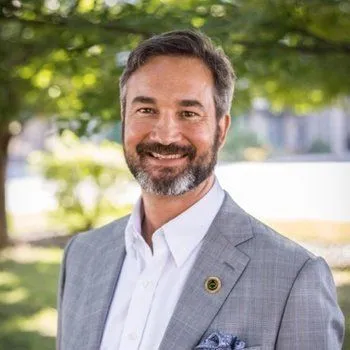
Cosmetic Surgeon
Early in his career, Dr. Vincent Gardner worked extensively in bariatric surgery. Seeing patients struggle with excess skin after major weight loss inspired his passion for cosmetic surgery. He loves giving people that “reveal moment” where they can finally see and feel the results of their hard work.
Alongside cosmetic surgery, Dr. Gardner has spent over two decades treating venous disorders. His minimally invasive vein procedures restore comfort, energy, and confidence, helping people feel like themselves again.