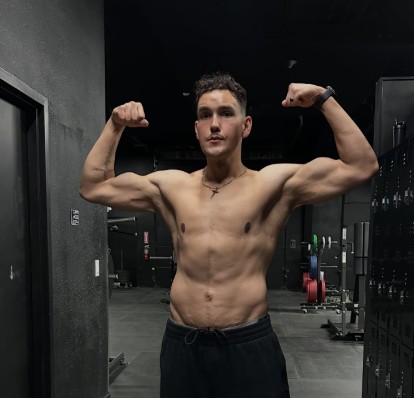
Things Nobody Tells You About Losing 240 Pounds
Some people have one wake-up call. Rodney had three. Dr. Gardner sits down with Rodney, his patient who lost 240 pounds on his own before coming to Eastern Shore Cosmetic Surgery to have his excess skin removed. Rodney talks about growing up heavy,...


Some people have one wake-up call. Rodney had three.
Dr. Gardner sits down with Rodney, his patient who lost 240 pounds on his own before coming to Eastern Shore Cosmetic Surgery to have his excess skin removed.
Rodney talks about growing up heavy, the three near-death experiences that changed everything, and why sustainable results come from building habits you actually enjoy, not chasing a fast fix.
He's honest about the body dysmorphia that follows major weight loss and what it felt like to finally see himself without the extra skin. Hear his advice to anyone still at the beginning of their weight loss journey.
Questions answered by this episode:
- What was it like growing up overweight as a kid?
- What was the wake-up call that started Rodney's weight loss journey?
- How did he actually lose 240 pounds?
- Why do so many people fail at keeping the weight off long term?
- What role did bulimia play early in his journey?
- What does sustainable weight loss actually look like day to day?
- What orthopedic issues came with extreme obesity, and how were they fixed?
- What surgeries did he have to remove excess skin after weight loss?
- How did skin removal surgery change how he sees himself?
- What advice does he have for anyone just starting their weight loss journey?
Follow Rodney on Instagram @brodfit_21
Read more about cosmetic surgery after weight loss
Follow Dr. Gardner on Instagram @drvincentgardner and TikTok @drgardner
Alabama the Beautiful is the cosmetic surgery podcast co-hosted by Dr. James Koehler and Dr. Vincent Gardner, surgeons with over 2 decades of expertise in cosmetic surgery and their trusty co-host Kirstin, your best friend, confidante, and the snarky yet loveable “swiss army knife” of Eastern Shore Cosmetic Surgery.
Have a question for Dr. Koehler, Dr. Gardner or Kirstin? Record your voicemail at alabamathebeautifulpodcast.com and we’ll answer it on the podcast.
Eastern Shore Cosmetic Surgery is located off Highway 98 at 7541 Cipriano Ct in Fairhope, Alabama.
To learn more about the practice or ask a question, go to easternshoreplasticsurgery.com
Follow the team on Instagram @easternshorecosmeticsurgery
Watch Dr. Koehler, Dr. Gardner & Kirstin on YouTube @JamesKoehlerMD
Alabama The Beautiful is a production of The Axis: theaxis.io
Theme music: Never Need a Reason, Guy Trevino and Friends
Announcer (00:02):
You're listening to Alabama the Beautiful.
Dr. Gardner (00:05):
Hey, it's Dr. Gardner with Eastern Shore Cosmetic Surgery. We are going to do a fun podcast today with Rodney Lambert. Rodney hails from the great state of Colorado. He's an amazing young man. He has quite an interesting journey ahead, and so we're going to kind of start with that. Rodney, say hey to everybody.
Rodney (00:27):
Hey, what's going on guys? Super excited to be here. I'll share more about my story and honestly just talk about everything we got going on today.
Dr. Gardner (00:38):
Yeah. Let's just start with your weight loss journey. What's the most that you've ever weighed?
Rodney (00:43):
My heaviest, I was about 440 pounds, give or take, right around there.
Dr. Gardner (00:49):
And how old were you when you weighed that much?
Rodney (00:53):
I was, I'd say anywhere from 18, maybe even younger. I'd say I've always been a big kid. I think I was 300 pounds before I was in middle school. So, it's like I've always been a bigger kid, but I think I hit the fours when I started getting into high school, no problem.
Dr. Gardner (01:11):
Wow. Well, and tell me, what was that like for you as a young person? Just being heavy, what was your relationship with your friends like? How was that? Just walk us through that a little bit.
Rodney (01:25):
Yeah, so for me, I didn't really realize this until after I lost weight, but I realized that everybody that I hung out with and tried to make my friends, I realized that they kind of kept me around because they could make fun of me and then they'd understand it upset me and they'd be like, "Oh, we're just joking, whatever." But it would just help fuel their addiction and fuel their problems because they could treat me however they want and they'd realize I'd always come running back because I was always picked last for everything. I didn't really have a lot of friends. So the people that I did hang out with, they realized, "Oh, hey, we can walk all over this kid and he's never going to care." And I think that took me some time to figure out and understand. But yeah, no, it's definitely something that a lot of people overweight don't even realize.
Dr. Gardner (02:16):
Sure, sure. Well, tell me, so what led to you, and let's talk about this. At what age did your weight loss journey start and how did that come about?
Rodney (02:28):
Sophomore year of college, I was right around, I think it was 22 at the time. I had a couple near death experiences where I had a major dirt bike accident that should have left me paralyzed or dead that I recovered from. I had a fatty liver disease where my liver was shutting down. I had all these kind of crazy testimonies behind just being fat. There was a lot more to it. And I kind of woke up one day and I was like, wow, okay, why am I still here? Okay like, my third chance at life kind of. And I was like, well, not very many people going to see a second chance, let alone a third. Why am I still here? And I was like, okay, well, maybe God's trying to show me something that I don't understand. And I was like, "Well, what's the first thing you try to have me change?" I was shirtless in the morning. I looked at myself in the mirror. I'm like, "Well, first off, I'm fat. I got to change that and then we'll see where that goes." And after that day, I stopped looking at myself as someone that can fail because I've tried losing weight in the past, but it just always was a failed attempt. But that day forward, I never wanted to go back to becoming that one person again.
Dr. Gardner (03:42):
Chronicle your journey a little bit. So if you started at 22, you woke up, you had your wake-up call, how did you go about it? Because I think there's a lot of people in your situation who they just don't know where to start and everybody's told, "Hey, you just need to move more and eat less." And I'm a former bariatric surgeon, and so I'm guilty of that. I told people, "Hey, you just need to move more, eat less." Just do that and you'll be fine. And clearly we know that doesn't work. So tell the people what you did so we can see if other people can learn from your story.
Rodney (04:17):
At first, if I'm being honest, I'm not perfect. Nobody is, and there's never going to be anybody that's perfect besides God. I mean, when I first started my weight loss journey, I was bulimic. I didn't know any better because I didn't have anybody there to teach me. And then once I learned more about nutrition, yeah, it's obviously it's pretty normal, eat less, move more. Yeah, duh. No, everybody can figure that out. But I think the biggest thing that a lot of people do get confused is when you're doing these types of things, you'd be amazed just getting rid of sugary drinks. Okay. This is a zero calorie sparkling water that I drink right now. Just eat the same that you've been eating now. Okay. Just get rid of all that sugary soda and liquid calories, like your coffees and stuff. Just eliminate those things and increase, add a 20-minute walk, not even 20 minutes.
(05:14):
It could be 10, 15 minutes. Just go get some steps. You'd be amazed on how much just cutting soda and coffee and sugary drinks out of your daily routine for something else, like a zero sugar energy drink or sugar-free coffee made with almond milk instead of whole milk. And then you get a 10-minute walk, you'd be amazed on just how much your body would feel a lot better by cutting out that sugar and just getting some more steps in. I think the biggest thing is too many people overcomplicate it and they want to chase a fast fix and they want the results now. But the biggest thing in order to actually keep sustainable results is you have to find things that you love and enjoy that can actually make it worth. Myself, I've lost 240 and then I do online coaching and personal training full-time.
(05:59):
I have all my clients right now, they have sugar throughout their day. They have ice cream still. They go out and have burgers and pizza and ice cream and candy whenever they want because I help them understand how to have it in moderation to make it feel like it's not punishment. We have to help transition you into thinking that it's not about dieting. We have to make this enjoyable for you so it doesn't seem like you're dieting because it's not a diet, it's a lifestyle change. And that's where people get confused.
Dr. Gardner (06:27):
Yeah, I think that's great advice. I think you hit the nail on the head. Unfortunately, we're set up to fail with the big food and big pharma. And I think making those baby steps, meaning just try cutting out sugary drinks. Or if you drink five sugar drinks a day, cut it down to two. I think
Rodney (06:49):
Baby steps.
Dr. Gardner (06:49):
Baby steps are important. Yeah. And if you can do baby steps, then you're going to start seeing some results even if they're small and then you can build on that. So I really like that advice. All right. So you started at 22, you had your wake-up call. How long did it take you to lose 240 pounds? And then tell us how you did it. I mean, obviously you did baby steps, but what was your ... Give us the progression.
Rodney (07:15):
Yeah, so it took me right around 18 months to lose all of the weight. It's pretty extremely quick. Everybody's body's different. Just because I lost 240 pounds in 18 months doesn't mean the next person can. The biggest thing is it was during COVID. I was in college at the time, college was now online. My gym's closed and stuff like that when I first started. But like I said, I wasn't going to let it be in a failed attempt. So what I did is I simply just found a way to make it work. So I would simply just find a way to make myself sweat more. So I'd like, okay, well, let's go for a nice walk around the park here for an hour and a half straight. Just grab some headphones and just doom scroll for an hour and a half. If you look at our screen time right now, I bet you a majority of you guys watching this right now, the screen time's out the roof.
(08:14):
What makes you think that you can't still keep that screen time high while occupying your movement? So I would just throw on a sweatsuit, I'd throw on a t-shirt and a hoodie and then some sweatpants and I would just go walk. Like I said, just it's all about getting those baby steps in. And you'd be amazed on how much just walking for an hour just outside, getting some fresh air and watching what you're eating will actually do for you. And I was tracking my food. I was weighing out everything I was eating. I was making all these shrimp alfredos and pastas. And I was simply just finding foods that I loved that tasted good. I'd make protein pancakes, I'd find some new low calorie desserts to make. I simply just made it feel like I wasn't even dieting. And I realized how much more food I could have throughout the day, realizing what nutrition actually was and just started progressing over time more and more, just really kind of figuring out, okay, why did I let this be an effect for so long?
Dr. Gardner (09:24):
Who's your support network? While you're doing all this, who's supporting you? Because everybody has to have some support.
Rodney (09:31):
Right now, it's obviously my fiance and my clients, honestly, the people that follow me, and then just my community at my gym. I got to keep my circle small. I work a lot, so I'm not very open to free time because I'm a walking example of anything that you want to accomplish in this life, if you put your head down and grind, you'd be amazed on how easy it actually is. And for me, I feel like I've accomplished so much, but I've also failed so hard and I've publicly shared that, that it's showing people what it is like to be real, be a human. And I want to just take this as far as I can to help people understand that no matter how hard life may be, the things that we take for granted on a day-to-day basis, other people are praying for. And I think that's a big thing that a lot of people need to understand.
Dr. Gardner (10:30):
Yeah, absolutely. Well, let's talk a little bit, I know you've had a couple of knee surgeries. Tell us briefly about your knee surgeries and were the knee problems a result of carrying that much weight for that long?
Rodney (10:44):
Yeah. So believe it or not, not a lot of people understand this, but every pound that you weigh is anywhere from two to four pounds of pressure that you're taking every step on your feet that goes through your entire leg. So if I'm taking 440 times four, it's over what, 15, 1600 pounds of pressure that I'm taking every step. So once you do that for over a decade, I just deteriorated that cartilage and the ligaments. And as I was still growing, my bones weren't fully healed yet or fully developed, so it just created a water deformity and my left leg was 35 degrees off normal. They had to go in there, break my tibia, my fibula, and my femur. They put plates and screws in my femurs. They stretched and lengthened both of my tibias and fibulas and basically brought them back to normal position.
(11:38):
And then it's been five surgeries to get to where I'm at today with my legs, still going through a lot of physical therapy at home and some rehab type things because there's a lot of side effects that come with having all of your legs and stuff healed like that. So it's been kind of a pain, but I think it's a lot better than where I was before because with having knock knees, I think a lot of times it doesn't hurt. It didn't really hurt me. But what did hurt me was mentally looking at myself in the mirror and realizing that I wasn't straight up and down. And when you go out in public, especially knowing that firsthand, is people are going to make fun of you. People are going to laugh at you, people are going to point at you. Okay, but now I can go outside with my legs reconstructed now and I can wear a pair of shorts, I can wear a pair of jeans and not have a care in the world because I know I'm straight.
(12:38):
I'm straight up and down. There's no knock knee deformity and my appearance isn't something that I'm embarrassed of anymore.
Dr. Gardner (12:46):
Let's kind of talk about your surgery. So we met you and started surgery, it's been several years ago and we started and I think we did a backlift and a chest lift with free nipple grafts and a tummy tuck as your first surgery. And I think as your second surgery, we converted the tummy tuck into a Fleur-De-Lis to take off some of that skin in the vertical plane as well as the horizontal. And we also did a direct neck lift to get rid of quite a bit of skin there. So tell me about your surgeries. What has that done for you? How has that changed things for you?
Rodney (13:26):
Yeah. So the biggest thing for me when it comes to surgeries, these things that I had, it's been kind of a night and day change, a night and day difference. For me, the biggest thing that I had to understand and realize too, it's like all of these obstacles and challenges that I've faced in my journey. And I wasn't embarrassed of the extra skin. The only reason why I got my extra skin removed is because I do social media and because I wanted to be an inspiration to other people. I want to walk people through the process. I wanted to show them what it's like and help them understand you don't have to have it removed if you don't want to. The only reason why, the main reason why I'm going, I did that is because this year, for example, I'm six months out from my second ever bodybuilding show.
(14:16):
I'm going to do two this year and it's like I wouldn't be able to do as well if I still had the extra skin and I have an eight pack for the first time in my entire life because I had my skin removed. I never thought that was possible. When I first came to you guys to have my surgeries, if you told me that that day, yo, you're going to have abs, bro, I never would've believed you guys. But now it's like I wake up every single day and I catch myself all the time just looking at myself in the mirror like, wow, this is me. I think a big thing that a lot of people get confused is they get embarrassed of the extra skin, but you'd be amazed if you took your shirt off in the gym or in public and they've seen you had extra skin.
(15:02):
Nine times out of 10 people that go to the gym would go, "Bro, wow, good job." Because that's not something that anybody can do. They have to earn that. And I think we just get so accustomed to the having body dysmorphia with being overweight that as we keep changing our appearance over and over and over again, we have to relearn how to love ourself. And I think that's one of the hardest things that everybody has to go through.
Dr. Gardner (15:29):
Yeah. I mean, I think that's great advice. I do think that a lot of people struggle with body dysmorphia. And I will say my experience in dealing with people that have lost a lot of weight, I think that a lot of people, unfortunately, they've done a great job losing the weight, but they feel trapped in all this extra skin. And I hear a lot of people tell me that they still see a big person in the mirror because of the extra skin. And honestly, it's fun. It's rewarding. And I love seeing people's ... I mean, I have people cry on post-op day one because they have a big mirror in their exam room and when they see themselves and they don't see the hanging skin, they get very emotional. And so people that aren't in that situation have never experienced that, obviously have no idea how liberating it can be to free yourself of that extra skin because it's almost like you're leaving that part of your life behind and you're forging something new.
(16:33):
So anyway, I think it's a really interesting subject and I just love my massive weight loss patients. It's just such a rewarding thing to work with them. What do you want to tell people out there that may be watching this and maybe struggling with some of the things that you've struggled with?
Rodney (16:54):
I mean, at the end of the day, every single day we have to be grateful. We have two functioning eyes, two functioning arms, two functioning legs. Cool. We have some extra skin. Cool. We're overweight. But the thing is we still got to live our life. I know people that have had amputees that can't afford prosthetics. Those are people that I'm like, wow, why am I going to sit here and be ungrateful for everything I've been through and have the opportunity to be blessed to change? And these guys are over here praying that they could be in my shoes. So at the end of the day, one big thing I want everybody to understand is no matter what types of goals that you have in this life, if you put your head down and grind, you can achieve anything that you want. And the promise that I want you to keep for yourself is like, once you make that first step of your life will never be the same.
(17:50):
So after that, it's all about taking those baby steps. Every single day, choose one simple habit. It doesn't have to be a day. It could be a week. Every month, choose one more simple habit that you want to add into your routine to help make you become the person that you want. In order to build consistency and keep the weight off I've had to learn and I teach all of my clients is like, it's all about figuring out how can we make this long term. It's not about chasing a fast fix. Okay. If you want to lose a hundred pounds in six months, it's possible. But the amount of people that I know that gained that a hundred pounds back is probably 90% of them because they didn't build consistent habits. They chased a fast fixed and then now they're paying the consequences and then they don't want to change again because they realized that they just ruined it.
(18:41):
I could talk about this for hours, but there's so much advice. I mean, I think these are definitely some of the biggest things that I would love to recommend to anybody.
Dr. Gardner (18:50):
Yeah, absolutely. I think I'm a project guy. I love hanging out in my garage and I love doing things, whether it's woodworking, metal working, something. I just love projects. And so I always have felt like the hardest part to any new project is just starting. And I think that's true for a lot of people with weight loss. Everybody wants to find new recipes and they want to talk about the gym or buy a new piece of equipment, but I mean, you have to start somewhere. And I think if you can just get over that hurdle of just start and you'll do well, but you just got to start. And so for anybody out there struggling, just start. Doesn't matter where you start, just start and that way you can build from there.
Rodney (19:36):
Yep, 1000%. I love that.
Dr. Gardner (19:39):
All right. Everybody, thanks for watching and Rodney Lambert from Colorado. He is our guest today. And like I said, he's just an amazing young man. He has accomplished quite a bit in his young life and we wish him all the success. And if you're interested in some online coaching and training, he would be your guy. So we'll put his information up and you can reach out to him if that's something you're looking for. We are at Fair Hope, Alabama, Eastern Shore Cosmetic Surgery. I'm Dr. Vincent Gardner and I'm with James Koehler. And if we can help you with your weight loss journey, please call us. Thanks. Thanks, Rodney.
Rodney (20:20):
Of course. Have a good rest of your day. It's good to talk to you again.
Announcer (20:25):
Got a question? Leave us a voicemail at alabamathebeautifulpodcast.com. To learn more about Eastern Shore Cosmetic Surgery, go to easternshorecosmeticsurgery.com. The commentary in this podcast represents opinion and does not present medical advice, but general information that does not necessarily relate to the specific conditions of any individual patient. If you enjoyed this episode, please share it and subscribe to Alabama the Beautiful on YouTube, Apple Podcasts, Spotify, or wherever you like to listen to podcasts. Follow us on Instagram @EasternshoreCosmeticSurgery. Alabama the Beautiful is a production of The Axis, T-H-E-A-X-I-S.io.